How to Demist Your Windscreen Quickly and Stop It Steaming Up in Winter
Introduction
Demisting your windscreen is essential before driving because a fogged screen restricts your view of the road. Driving with poor visibility is unsafe and could even cause legal trouble if you cannot see clearly ahead.
Windscreen mist forms when warm, moist air inside the cabin meets colder glass. Your breath, body heat and any damp items increase humidity. When that warm air hits a cold windscreen, it turns into tiny droplets.
This happens more in winter and wet weather, but the good news is that there are several quick ways to clear the glass. Below, we explain how to demist windscreen quickly and useful prevention methods.
What Causes Windscreen Misting?
Windscreens mist when moisture in the air inside your car lands on the colder glass surface and turns into tiny droplets. This happens because warm air holds more water vapour than cold air. When the warm, humid air in your cabin meets the cold windscreen, it cools quickly and forms condensation.
Clearing your screen before driving is important because UK law requires drivers to have a clear view through all windows. Driving with limited visibility can put you, your passengers, and others at risk, especially in busy or low-light conditions.
The good news is that misting is easy to fix. With the right steps, most windscreens clear in just a couple of minutes, even on cold or damp days.
How to Demist Windscreen Quickly
There are a few effective techniques you can use to demist car windscreen fast. These work even better together.
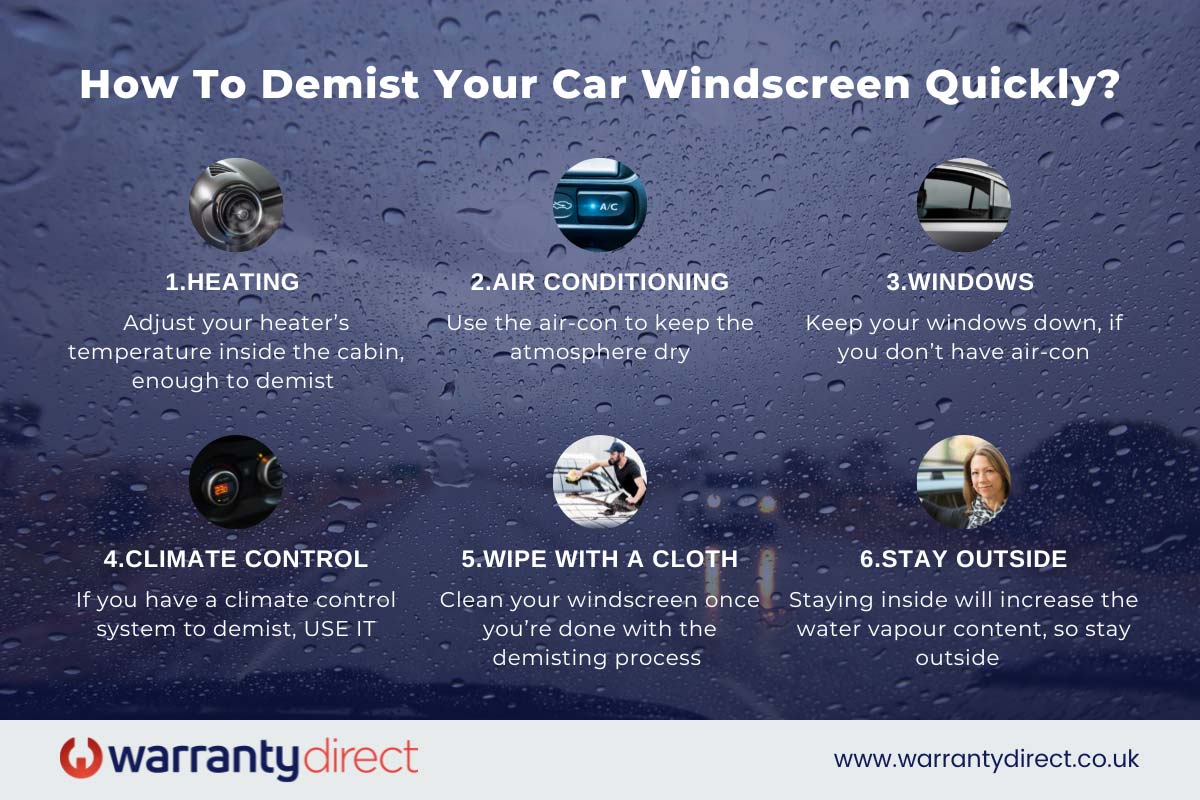
1. Use the Heater Correctly
Start by turning on your heater and directing the airflow towards the windscreen. It is better to warm the cabin gradually than to blast maximum temperature immediately, because heating the air slowly allows moisture to evaporate rather than circulate around the cabin.
Most cars have a windscreen symbol on the climate panel. Select this setting so warm air reaches the glass directly and stops more condensation forming.
2. Open the Windows If You Do Not Have Air Con
If your car does not have working air conditioning, or the cabin is extremely humid, opening the windows slightly will help let excess moisture escape. Bringing fresh air in replaces the warm, wet air inside the cabin and reduces condensation.
Avoid breathing directly onto the glass while the windscreen demister does its job. Always remain close to the vehicle while demisting and never leave it running and unlocked.
3. Use Climate Control If Your Car Has It
Some vehicles include automatic demisting modes within the climate control system. These settings handle temperature and airflow automatically, adjusting them to remove moisture as efficiently as possible. If your car has this feature, turn it on during cold weather and follow your handbook if unsure where the controls are.
4. Turn On Air Conditioning
Air conditioning pulls moisture out of the air, which is why it clears condensation faster than heat alone. If your air con is working, switch it on at the same time as the heater. In cold weather this may feel counter-intuitive, but a dry cabin clears mist quickly.
If the windscreen is also iced over, you will need to remove frost before setting off. Use the heater, a scraper or an approved de-icer spray. Never pour boiling water on the windscreen, as sudden temperature change can crack the glass.
Why Air Conditioning Is the Fastest Demisting Tool
AC removes moisture, so it clears fog very quickly. Many drivers think AC is only useful in summer, but it is actually the quickest and most effective way to defog a windscreen in winter too and is one of the most effective tools against fogging during colder months.
5. The Popular Shaving Foam Method Explained
A widely used prevention trick involves spreading shaving foam on the inside of the windscreen, then wiping it off.
Shaving foam leaves behind a thin layer that helps prevent moisture sitting on the glass.
This does not remove mist instantly, but it is useful as a prevention method, especially in colder months.
Preventing Windscreen Mist Before it Starts
There are a few simple habits that make misting far less likely, especially in cold or wet weather. The aim is to reduce moisture inside the cabin and keep the glass surface clean, so condensation has less to cling to.
- Keep the Inside Glass Clean
Dirt and residue encourage moisture to settle on the glass, so regular cleaning helps keep the window clearer for longer. - Remove Wet Clothing and Umbrellas
Any damp items in the car increase humidity. Try to take coats, umbrellas and boots out of the cabin as soon as possible. - Use Outside Air Rather Than Recirculation
Fresh outside air prevents humidity building up. Recirculation keeps moist air trapped inside the car. - Run Air Conditioning Regularly
Running your AC, even in winter, helps keep the system working and removes moisture from the cabin. - Replace Your Cabin Filter If it is Blocked
A clogged cabin filter reduces airflow, which can make fogging worse. Replacing it keeps ventilation working as it should. - Use Moisture Absorbers
Small dehumidifier bags or baking soda placed near the windscreen help absorb moisture overnight.
Common Mistakes that Make Misting Worse
A few habits can slow the demisting process and sometimes make condensation come back even faster. Avoiding the points below helps the windscreen clear sooner.
- Using the Recirculation Setting
Recirculation keeps the same humid air inside the car instead of bringing in dry outside air. Switch this setting off when clearing the screen. - Turning the Heater to Maximum Straight Away
Very hot air on a cold windscreen can make condensation worse at first. Increase heat gradually while the cabin air dries out. - Not Using Air Conditioning
Air conditioning removes moisture from the cabin, so it clears fog much faster than heat alone. Switch the AC on at the same time as the heater, even in winter. - Directing Airflow Away From the Glass
Make sure the vents point towards the windscreen and side windows. This heats the glass and helps stop mist from reforming. - Wiping With Your Hand Or a Dirty Cloth
Smearing dirt or grease across the glass gives moisture something to cling to. Use a clean microfibre cloth if you need to wipe the screen. - Pouring Boiling Water On the Windscreen
Sudden temperature change can damage the glass. Use the heater, a scraper or de-icer spray if there is ice present. - Leaving Wet Items In the Car
Damp coats, umbrellas and shoes add moisture to the air and make misting return more easily. - Staying Inside the Car While Demisting
Warm breath adds moisture back into the air. Where safe, step outside briefly or keep a window open a little while the screen clears.
What to Do If Your Windscreen Will Not Clear
If the windscreen is still foggy after you turn on the heater and AC, take a few quick steps to remove moisture from the cabin and warm the glass. These actions help the car clear condensation as soon as possible.
- Turn On the Heater And Air Conditioning Together: Warm air helps dry the glass and the AC removes moisture from the cabin.
- Select the Front Demist Setting: This sends airflow directly to the windscreen and speeds up clearing.
- Switch Off Recirculation: Fresh air from outside replaces the humid air in the car.
- Open the Windows Slightly: This reduces humidity and helps balance temperature inside the cabin.
How to Stop Car Steaming Up?
If the windscreen keeps fogging up again, try a few longer-lasting solutions.
- Clean the Inside Glass Regularly: A clean surface fogs less and helps moisture slide off instead of collecting.
- Use Anti Fog Treatments: Shaving foam or commercial sprays leave a thin layer that helps prevent condensation from forming.
- Remove Moisture Sources: Avoid leaving wet clothing, drinks, or damp mats in the car. Keep interior seals in good condition to stop water entering the cabin.
- Use Moisture Absorbers: Dehumidifier bags or silica packs help dry the air overing.
Many drivers also ask whether to use hot or cold air to demist windscreen surfaces. Warm air clears condensation faster, but cold, dry air from outside also helps. The quickest method combines warm air from the heater and dry air from the AC.
Conclusion:
Keeping your windscreen clean and clear is essential because it directly affects how well you can see the road ahead. Driving with a misted screen can reduce visibility and, in the UK, it can also be considered illegal if it prevents you from seeing properly. Taking a few minutes to demist the glass before setting off helps keep you, your passengers and other road users safe.
Looking after your windscreen is only one part of keeping a vehicle in good condition. Mechanical faults with the heater, air conditioning or ventilation can also cause misting, and these systems can be costly to repair. A good warranty can help protect you from unexpected bills if something goes wrong. Warranty Direct provides warranty cover designed to help with unexpected repair costs, so you can keep your car running smoothly through colder months and beyond.