Cabin & Pollen Filter Guide: Signs, Costs and Summer Tips UK
As temperatures rise and summer approaches, most UK drivers focus on road trips, air conditioning, and general vehicle maintenance. However, one key component often gets overlooked: the cabin or pollen filter. While it may seem like a small part of your car, it plays a key role in maintaining clean air inside your vehicle and ensuring a comfortable driving experience during the warmer months.
During summer, pollen levels increase significantly across the UK, while dust, pollution, and allergens become more common. If your cabin or pollen filter is dirty or blocked, it can reduce airflow, make your air conditioning less effective, and even worsen allergy symptoms. This is why checking and replacing your filter should be an essential part of your summer car maintenance checklist.
In this guide, we explain what cabin and pollen filters are, how they work, signs they need replacing, replacement costs in the UK, and how often you should change them to keep your car summer ready.
What Is a Cabin Filter in a Car?
Air conditioning helps keep your vehicle at a comfortable temperature during warmer months, making journeys more pleasant for both drivers and passengers.
A cabin filter, also known as a cabin air filter, is a component within your car’s air conditioning system that cleans the air before it enters the vehicle through the HVAC system. This system controls your car’s heating, ventilation, and air conditioning.
The main purpose of a cabin filter is to trap dust, pollen, dirt, mould spores, and other airborne contaminants that could affect air quality inside the vehicle or impact the performance of the ventilation system.
Depending on the make, model, and age of your car, cabin filters are usually located behind the dashboard, beneath the glovebox, or under the bonnet near the windscreen.
Although often overlooked, cabin filters play a key role in improving in-car air quality, supporting airflow, and helping your HVAC system perform efficiently.
What Is a Pollen Filter?
A pollen filter is a type of cabin air filter specifically designed to prevent pollen, allergens, and tiny airborne particles from entering your vehicle cabin.
In many cases, the terms cabin filter and pollen filter are used interchangeably in the automotive industry. However, some modern vehicles feature advanced pollen filters with activated carbon technology, which can also help remove unpleasant odours and harmful gases from outside air.
Pollen filters are especially beneficial during spring and summer, when pollen levels are high and hay fever symptoms become more common. A clean pollen filter can help minimise sneezing, itchy eyes, and discomfort while driving.
If you regularly drive in urban environments or congested traffic, replacing your pollen filter becomes even more important because it helps block pollutants and harmful particles from entering the cabin.
Cabin Filter vs Pollen Filter: What Is the Difference?
Many drivers wonder whether a cabin filter and a pollen filter are the same thing. In most cases, the answer is yes.
The term cabin filter refers to the filter responsible for cleaning the air entering the car’s interior. Meanwhile, pollen filter is a more commonly used name in the UK, particularly because of its role in trapping pollen and allergens.
However, there can be slight differences depending on the type of filter used:
- Standard cabin filter: A standard filter captures dust, dirt, debris, and larger airborne particles.
- Activated carbon pollen filter: An upgraded version designed to trap smaller particles, harmful pollutants, bad odours, and gases from outside air.
The type fitted in your car depends on the manufacturer and model, but both serve the same essential purpose — improving in-car air quality and protecting passengers from airborne contaminants.
What Does a Cabin or Pollen Filter Do?
Your cabin or pollen filter acts as a protective barrier between outside air and your vehicle’s interior. Whenever you switch on the heating or air conditioning, air passes through the filter before entering the cabin.
A good-quality cabin filter helps:
- Remove pollen and allergens
- Filter dust and dirt particles
- Block pollutants from busy roads
- Improve airflow through air vents
- Support heating and cooling performance
- Reduce unpleasant smells inside the vehicle
Without a properly functioning filter, contaminants can circulate inside the car, affecting both comfort and air quality.
For drivers who spend a lot of time on the road or travel with children, maintaining a clean cabin filter can make a noticeable difference in driving comfort.
Why Your Car Needs a Cabin or Pollen Filter Check Before Summer?
Summer conditions can put additional pressure on your vehicle’s ventilation system. Whether you are commuting in traffic or heading off on a long weekend getaway, your car’s cabin filter works constantly to keep the air inside fresh and clean.
Here are a few reasons why checking your cabin or pollen filter before summer matters:
Increased pollen levels
Summer often brings higher pollen counts, especially in rural and suburban areas across the UK. A functioning pollen filter helps reduce allergens entering the cabin, making journeys more comfortable for drivers and passengers with hay fever or allergies.
Better air conditioning performance
During warmer weather, drivers tend to rely heavily on-air conditioning systems. A clogged cabin filter can restrict airflow, making your air conditioning less efficient and reducing cooling performance.
Cleaner air inside the car
Cabin filters help trap dust, dirt, pollution, and airborne particles before they enter the vehicle. Replacing an old filter improves air quality and creates a healthier driving environment.
Reduced unpleasant smells
If you notice musty or stale odours coming from the vents, it could indicate a dirty or blocked filter. Replacing it can help eliminate unpleasant smells and restore fresher airflow.
Signs of a Faulty or Blocked Cabin Filter
A blocked or worn-out cabin filter can gradually affect your vehicle’s performance and air quality. While the symptoms may not seem serious at first, ignoring them can make driving less comfortable, especially during summer.
Here are some common signs your cabin or pollen filter may need replacing:
Weak airflow from air vents
If your heating or air conditioning feels weaker than usual, a clogged filter could be restricting airflow through the system.
Unpleasant smells inside the car
A dirty filter can trap moisture, dirt, and bacteria, causing musty or stale odours to come through the vents.
Increased dust inside the cabin
If you notice dust accumulating more quickly on surfaces, it may indicate the filter is no longer working effectively.
Foggy or misted windows
Poor airflow can make it harder to clear condensation from windows, reducing visibility.
Worsening allergy symptoms
If you or your passengers experience sneezing, itchy eyes, or breathing discomfort while driving, a blocked pollen filter may be allowing allergens into the cabin.
Strange noises from the ventilation system
A heavily clogged filter can sometimes cause unusual sounds when air struggles to pass through the ventilation system.
What Does a Cabin Filter Look Like?
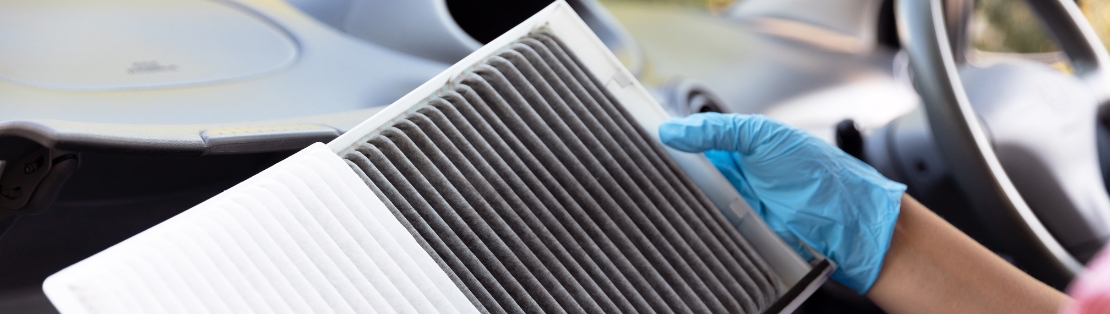
A cabin or pollen filter may be small, but it performs a key role in maintaining air quality inside your car. Most cabin filters are rectangular or square-shaped and made from pleated paper, cotton, or synthetic material designed to trap airborne particles.
Depending on the vehicle, cabin filters can vary in size and thickness, but they have a folded or layered appearance to increase the surface area for capturing dirt, dust, pollen, and debris.
A clean cabin filter usually appears light grey or white, while a dirty filter often looks dark, dusty, clogged, or covered with debris such as leaves and dirt.
Modern vehicles may use one of the following types of filters:
- Standard particle filters: These are designed to capture dust, dirt, and pollen particles before they enter the cabin.
- Activated carbon filters: These advanced filters not only trap particles but also help absorb unpleasant odours, fumes, and pollutants from traffic.
If your filter appears heavily clogged or discoloured during inspection, it is usually a sign that replacement is overdue.
Where Is the Cabin or Pollen Filter Located?
One of the most common questions drivers ask is: Where is the cabin filter located?
The location depends on your vehicle’s make and model, but in most cars, the cabin or pollen filter can usually be found in one of the following places:
Behind the glovebox
This is one of the most common locations in modern vehicles. Accessing the filter may require removing or lowering the glovebox.
Under the dashboard
Some manufacturers position the cabin filter underneath the dashboard, often on the passenger side.
Under the bonnet
In certain vehicles, the filter is fitted near the windscreen under the bonnet area.
Because placement varies by manufacturer, it is always worth checking your vehicle handbook before attempting replacement.
How Long Do Cabin Filters Last?
When it comes to the lifespan of a cabin filter within your vehicle’s HVAC system, most filters typically last up to 15,000 miles or should be replaced at least once every 12 to 18 months.
However, the lifespan of a cabin or pollen filter can vary depending on several factors, including how frequently the vehicle is used, average weather conditions, humidity levels, the quality of the filter, and the condition of the HVAC system.
Other factors such as high pollution levels, seasonal pollen, dust, dirt, and regular air conditioning use can also cause filters to become clogged sooner than expected.
For drivers who regularly travel in busy cities, dusty areas, or during high pollen seasons, replacing the filter more frequently may help maintain better airflow and cleaner air inside the vehicle.
How Often Should You Change Your Cabin or Pollen Filter?
Although replacement schedules vary depending on the manufacturer, most experts recommend changing your cabin or pollen filter every 12 months to 18 months or around 12,000 miles.
What Happens If You Don’t Replace a Cabin Filter?
Ignoring a worn or clogged cabin filter may not seem like a major issue initially, but over time it can negatively affect your driving experience.
Here are some potential consequences of delaying replacement:
Reduced air quality inside the car
A dirty filter becomes less effective at trapping pollutants, dust, and allergens, allowing contaminated air to circulate inside the cabin.
Poor air conditioning performance
Restricted airflow can make your heating and cooling systems work harder, reducing efficiency during hot summer weather.
Increased allergy symptoms
Blocked pollen filters may struggle to prevent allergens from entering the vehicle, making journeys uncomfortable for people with hay fever.
Persistent unpleasant smells
Moisture trapped in a dirty filter can lead to stale or musty odours coming through air vents.
Increased strain on the ventilation system
Over time, poor airflow may place extra pressure on the HVAC system, potentially leading to expensive repairs.
Replacing a cabin filter is a relatively low-cost maintenance task that can prevent bigger comfort and performance issues later.
How to Change Your Cabin Filter
As cabin air filters can be in different areas depending on the vehicle, the first step is to check your car’s make, model, and year to find where the filter is positioned.
In most vehicles, the cabin filter is usually located behind the glovebox, beneath the dashboard, or under the bonnet near the windscreen in a dedicated housing.
Here are the steps you can follow to replace your cabin filter:
Make sure the engine is turned off
Before starting, ensure the engine is switched off and there is no power running through the vehicle. Once safe, locate the cabin filter housing.
Remove the filter cover
Open the housing cover by either unclipping it or carefully removing screws, depending on the vehicle design.
Remove the old filter
Carefully slide out the existing filter from its housing and inspect it for dirt, dust, and debris.
Clean the housing
Wipe away any dust or debris inside the filter housing to help improve airflow and extend the effectiveness of the replacement filter.
Install the new cabin filter
Insert the replacement filter carefully, ensuring it is facing the correct direction and properly fitted into the housing.
Reattach the filter cover
Secure the housing cover by clipping or screwing it back into place and clean away any loose dirt.
Turn on the vehicle and test the system
Start the vehicle and test the heating, ventilation, and air conditioning system to ensure airflow is working properly through all settings and fan speeds.
Although many drivers replace filters themselves, professional servicing may be the better option if access is difficult, or you are unsure about compatibility.
How Much Does It Cost to Replace a Cabin or Pollen Filter in the UK?
The cost of replacing a cabin or pollen filter in the UK can vary depending on your vehicle type, garage labour charges, and the filter quality used.
On average, UK drivers can expect to pay:
- Cabin or pollen filter part cost: around £10 to £40
- Professional replacement cost: typically, £40 to £100, including labour
Premium vehicles or activated carbon filters may cost more, while DIY replacement can significantly reduce expenses.
Although it may seem like a minor maintenance task, replacing a clogged cabin filter can improve airflow, driving comfort, and air conditioning performance — particularly during summer.
Choosing the Right Cabin or Pollen Filter for Your Car
Not all cabin filters are the same, so choosing the correct replacement matters.
When selecting a filter, consider:
- Vehicle compatibility: Always check your vehicle registration or manufacturer guidance to ensure the filter fits your car model.
- Standard vs activated carbon filters: Standard filters are suitable for trapping dust and pollen, while activated carbon filters provide additional protection against odours and pollutants.
- Driving conditions: If you regularly drive in city traffic or suffer from allergies, an upgraded filter may offer better air quality benefits.
Choosing the right filter can improve cabin comfort and help maintain efficient airflow throughout the year.
Summer Car Maintenance Checklist: Don’t Forget Your Filters
Getting your vehicle ready for summer involves more than simply checking tyres or topping up fluids. Your cabin or pollen filter should also be included as part of your seasonal maintenance routine.
Before summer journeys, consider checking:
- Cabin or pollen filter condition
- Air conditioning performance
- Coolant levels
- Tyre pressure and tread depth
- Windscreen washer fluid
- Windscreen wipers and visibility
A quick inspection can help ensure your car remains comfortable, safe, and ready for warmer weather.
FAQs
1. Is a cabin filter the same as a pollen filter?
In most cases, yes. The terms are often used interchangeably in the UK, although some pollen filters include activated carbon technology for additional protection against odours and pollutants.
2. How often should I replace my pollen filter?
Most manufacturers recommend replacing a pollen filter every 12 months or around 12,000 miles, although this can vary depending on driving conditions.
3. Can a dirty cabin filter affect air conditioning?
Yes. A blocked cabin filter can restrict airflow, making your air conditioning less effective and reducing cooling performance.
4. What are the symptoms of a blocked pollen filter?
Common signs include poor airflow, unpleasant smells, increased dust, foggy windows, noisy ventilation, and worsening allergy symptoms.
5. Can I drive with a dirty cabin filter?
Yes, but it may reduce comfort, worsen air quality, and affect heating or cooling efficiency over time.
6. Does changing cabin filter improve air conditioning?
In many cases, yes. Replacing a clogged filter can restore airflow and help improve overall heating and cooling performance.
7. Can a pollen filter help with hay fever?
Yes. A clean pollen filter helps reduce allergens entering the cabin, which may help drivers and passengers with hay fever symptoms.
8. Is replacing a cabin filter a DIY job?
For many vehicles, yes. However, some models have hard-to-access filters, making professional replacement easier.
9. Do electric cars have cabin filters?
Yes. Electric vehicles also use cabin filters to maintain clean air inside the car and support ventilation systems.
Conclusion
As summer approaches, preparing your vehicle for warmer weather should involve more than washing the car or planning road trips. Your cabin or pollen filter plays an essential role in maintaining clean air, supporting air conditioning performance, and improving comfort inside the vehicle.
Whether you are dealing with rising pollen levels, unpleasant smells, or weak airflow, replacing a worn cabin filter can make a noticeable difference to your driving experience. Since replacement is affordable, keeping your filter in good condition is a simple way to support overall vehicle maintenance.
Staying on top of small maintenance checks today can help prevent larger repair costs and ensure your car remains ready for every summer journey ahead. While regular servicing can reduce the risk of unexpected issues, repairs can still happen when you least expect them. With comprehensive vehicle protection from Warranty Direct, UK drivers can enjoy added peace of mind against unexpected repair bills, helping keep their car road-ready throughout every season.