
How to Keep Your Car Cool in Summer: 10 Top Tips
Summer driving can make your car feel uncomfortably hot, particularly after it has been parked in direct sunlight. A hot cabin can make journeys unpleasant, while poor air conditioning or an overheating engine can indicate a problem that needs attention.
The good news is that a few simple steps can help you keep your car cooler and prepare it for warmer weather. From using a windscreen sunshade and ventilating the cabin to check your coolant, tyres and air conditioning, this guide covers practical ways to keep your car comfortable and running properly throughout summer.
Why Does Your Car Get So Hot in Summer?
A parked car can heat up quickly when sunlight passes through the windows and warms the dashboard, seats, and other interior surfaces. With the windows closed, that heat has limited opportunity to escape, making the cabin feel warmer than the outside air.
Dark interiors and direct sunlight can make the problem worse. The temperature can also rise quickly when a car is parked on an exposed driveway, in an open car park or on a roadside with no shade.
Your car's air conditioning is designed to remove heat from the cabin and circulate cooler air. However, relying on the AC alone is not always the most efficient way to cool a hot interior. Ventilating the car first can help remove some of the trapped hot air before the cooling system has to work harder.
How to Keep Your Car Cool in Summer: Top 10 Tips
Keeping your car cool starts before you even turn the engine on. These simple measures can help reduce heat build-up and make the cabin more comfortable.
1. Park in the Shade Whenever Possible
Parking in the shade is one of the easiest ways to reduce the amount of direct sunlight entering your car.
Whenever possible, choose a covered car park, garage, or shaded parking space. If you are parking for several hours, consider where the sun will be later in the day rather than only looking at the shade when you arrive.
Even partial shades can be preferable to leaving the entire vehicle exposed to direct sunlight.
2. Use Windscreen Sunshade
A windscreen sunshade can help reduce direct sunlight entering through the front windscreen while your car is parked.
The windscreen is one of the largest areas through which sunlight enters the cabin, so a reflective sunshade can help reduce heat build-up around the dashboard and front seats.
Use the sunshade whenever your vehicle is parked in direct sunlight and remove it before driving.
3. Ventilate Your Car Before Setting Off
If your car has been sitting in the sun, the cabin may contain a large amount of trapped hot air. Where it is safe to do so, open the doors or windows briefly before setting off. This allows some of the hot air to escape.
Once you start driving, you can use the air conditioning to bring the cabin down to a more comfortable temperature.
Never leave a vehicle unattended with the engine running simply to cool the interior and avoid leaving windows open where there is a security risk.
4. Use Your Air Conditioning Properly
Air conditioning is usually the most effective way to cool the cabin while driving.
When you first enter a hot vehicle, allow some of the trapped heat to escape before relying fully on the AC. Then switch on the air conditioning and adjust the fan and temperature to suit the conditions.
You do not necessarily need to set the temperature to its lowest level. Once the cabin reaches a comfortable temperature, adjust the system to maintain it.
5. Switch to Air Recirculation Once the Cabin Cools
Your car's air recirculation function can be useful once the initial hot air has been removed from the cabin.
Instead of continually drawing warmer outside air into the vehicle, the system recirculates air already inside the cabin. This can help the air conditioning maintain a cooler interior.
For a hot car, ventilate the cabin first. Once the temperature starts to fall, use recirculation to help maintain the cooler air.
6. Keep Your Windows Closed When Using AC
Opening the windows can help release hot air when you first get into a hot car but keeping them open while relying on the air conditioning can make cooling less efficient.
Once the initial hot air has been removed, close the windows and allow the AC system to cool the cabin.
If you do not have air conditioning, however, opening the windows can provide useful airflow while driving.
7. Protect Hot Seats and Surfaces
Some seats and interior surfaces can become uncomfortable to touch after sitting in direct sunlight.
A sunshade can help reduce this effect, while parking in the shade is even more effective.
If you use removable seat covers or other interior accessories, make sure they are suitable for your vehicle and do not interfere with airbags, seat belts or other safety equipment.
8. Check Your Air Conditioning System
If your car's air conditioning is not cooling as effectively as it used to, do not simply assume that hot weather is responsible.
Signs that the system may need checking include:
- AC blowing warm or only slightly cool air
- Weak airflow from the vents
- Cooling that becomes intermittent
- Unusual smells
- Unusual noises when the AC is switched on
- The cabin taking much longer than usual to cool
There can be several causes of poor AC performance, so a qualified technician should diagnose the problem rather than replacing parts unnecessarily.
9. Keep Your Car's Cooling System Maintained
It is important to distinguish between air conditioning and the vehicle's engine cooling system. The AC cools the air inside the cabin. The engine cooling system helps control engine temperature.
Check the coolant level when the engine is cold and follow the vehicle manufacturer's maintenance recommendations.
If you notice a coolant leak, repeated loss of coolant, an unusually high temperature gauge reading or a temperature warning light, stop somewhere safe and investigate the problem. Continuing to drive an overheating vehicle can result in serious engine damage.
Never open a hot radiator or coolant system because pressurised coolant can cause serious burns.
10. Take Regular Breaks and Stay Hydrated
Keeping the cabin cool is only part of staying comfortable during summer driving.
Carry enough drinking water for your journey and take regular breaks on longer trips. If you start feeling tired, uncomfortable, or affected by the heat, stop somewhere safe.
Never leave children, vulnerable passengers or pets unattended in a parked vehicle, even for a short period.
How to Cool Down a Hot Car Quickly?
If your car has been sitting in direct sunlight, the cabin can become much hotter than the outside air. The quickest way to cool it down is to expel the trapped hot air first, then use the air conditioning to bring the cabin temperature down.
1. Fan out the hot air
If it is safe to do so, open the windows on one side of the car and use a door on the opposite side to fan the hot air out of the cabin.
Open and close the door several times to help move the hot air outside. This can be useful when the car is parked in direct sunlight.
Avoid doing this in a busy car park or anywhere the open door could create a safety risk.
2. Switch on the air conditioning
Start the engine and turn the air conditioning on. Initially, use the fresh air setting rather than recirculation so that hot air can be pushed out of the cabin.
If it is safe and practical, leave the windows open for a brief time while the AC starts cooling the interior.
3. Direct cool air through the lower vents
Directing cool air towards the footwells can help push warmer air upwards through the cabin.
You can then gradually adjust the vents and airflow as the interior temperature falls. There is no need to keep the windows fully open once the cabin starts becoming cooler.
4. Keep the windows open if you have no AC
If your car does not have air conditioning, opening the windows while driving can help improve airflow through the cabin.
You can also use the car ventilation fan to circulate the air. The effectiveness will depend on the outside temperature, humidity, and driving conditions, so take regular breaks if the heat becomes uncomfortable.
5. Close the windows and use recirculation
Once the air conditioning is producing cold air and the initial hot air has been removed, close the windows and switch to air recirculation.
This allows the system to circulate the cooler air already inside the cabin rather than continually bringing warmer outside air into the vehicle.
You can then adjust the vents, fan speed, and temperature to maintain a comfortable cabin temperature.
Quickest method: Let the trapped hot air escape -> switch on the AC using fresh air -> allow the cabin to cool -> close the windows -> switch to recirculation.
If your air conditioning continues to blow warm air or takes significantly longer than usual to cool the cabin, have the system checked by a qualified technician.
How to Prevent Your Car Getting Hot in the First Place
The easiest way to deal with a hot car is to stop excessive heat from building up inside it. A few simple precautions before parking can make the cabin more comfortable when you return.
- Park in the shade or covered parking whenever possible.
- Use a windscreen sunshade to block direct sunlight.
- Use removable window shades to reduce heat entering through the side windows.
- Choose a parking spot that will remain shaded for longer.
- Leave the windows slightly open only when it is safe and secure.
- Remove electronics and other heat-sensitive items from the cabin.
- Keep the dashboard and interior free from unnecessary items.
- Never leave children or pets unattended in a parked car.
- Use covered parking when leaving your car for several hours.
- Check the weather and plan your parking location on particularly hot days.
Summer Car Care Checks Before a Long Journey
At Warranty Direct, we know that a little preparation can make a big difference to a summer journey. That's why We've put together the "ROAD TRIP" checklist to help drivers prepare their cars for a safe, comfortable summer journey.
From checking your tyres and oil to testing your air conditioning and coolant, these simple checks can help you spot potential issues before setting off.
Here's our ROAD TRIP checklist:
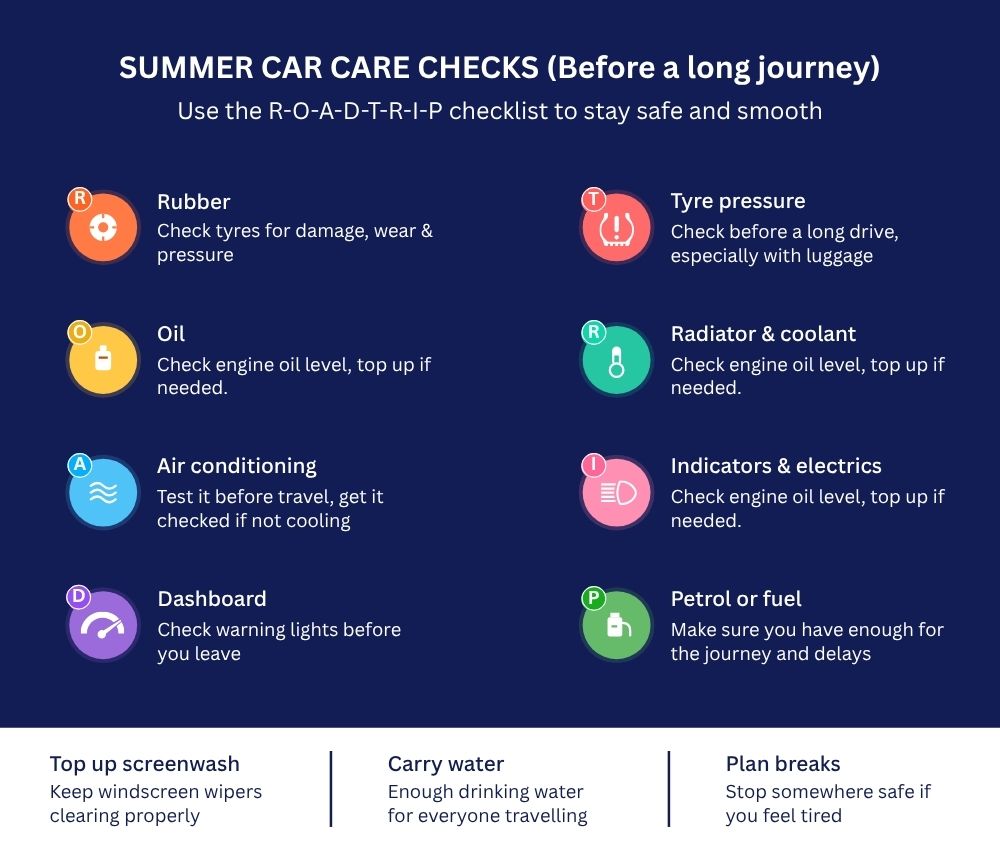
- R is for Rubber: Check your tyres for damage, uneven wear and sufficient tread, and make sure they are inflated to the recommended pressure.
- O is for Oil: Check the engine oil level when the engine is cool and top it up with the correct oil if necessary.
- A is for Air Conditioning: Test your AC before the journey. If it blows warm air or takes longer than usual to cool the cabin, get it checked.
- D is for Dashboard: Check for warning lights before setting off. Don't ignore a warning that could indicate a mechanical problem.
- T is for Tyre Pressure: Check your tyre pressures before a long journey, particularly if you're carrying extra passengers or luggage.
- R is for Radiator & Coolant: Check the coolant level when the engine is cold. If it is low or you notice a leak, have the vehicle inspected.
- I is for Indicators & Electrics: Check out lights, indicators, wipers, windows and other essential electrical systems before leaving.
- P is for Petrol or Fuel: Make sure you have enough fuel for the journey and allow for traffic delays or diversions.
Don't Forget Screenwash and Water
Alongside your ROAD TRIP checks, top up your screenwash and make sure your wipers are clearing the windscreen properly. Carry enough drinking water for everyone travelling and plan regular breaks on longer journeys.
What to Check If Your Car Is Not Cooling Properly
If your car is not cooling as expected, first consider whether the problem is limited to the cabin or whether there are signs of a wider vehicle issue.
For the air conditioning, check whether:
- The fan produces normal airflow.
- The air becomes cooler when the AC is switched on.
- The cooling performance has recently changed.
- There are unusual smells and noises.
- The problem occurs intermittently or continuously.
If the AC blows warm air despite being switched on, or cooling performance has deteriorated significantly, arrange an inspection.
It is also important to distinguish air conditioning problems from overheating an engine. If the temperature warning light comes on, the temperature gauge rises unusually high, steam appears, or you notice other signs of overheating, stop somewhere safe and follow your vehicle manufacturer's guidance. Continuing to drive an overheating vehicle can cause serious engine damage.
Conclusion: Keep Your Car Comfortable and Ready for Summer
Keeping your car cool in summer does not have to be complicated. Parking in the shade, using a windscreen sunshade, ventilating the cabin, and using your air conditioning correctly can all make hot-weather journeys more comfortable.
If your AC is not working properly, or you notice engine overheating or another unusual vehicle problem, get it checked rather than ignoring it. Before a long summer journey, also take a few minutes to check your tyres, coolant, fuel, air conditioning and other essential systems.
For extra peace of mind, Warranty Direct offers extended car warranty covers roadside assistance to help you deal with unexpected vehicle problems, subject to your chosen cover and its terms, conditions, and exclusions.
Get Your Car Warranty quote today and see which cover could suit your vehicle.
FAQ'S
1. How can I keep my car cool in summer?
Park in the shade, use a windscreen sunshade and ventilate the cabin before driving. Once you're on the road, use the air conditioning and recirculation setting to maintain a comfortable temperature.
2. What is the quickest way to cool down a hot car?
Let some of the trapped hot air escape before using the air conditioning. Once the cabin starts cooling, close the windows and switch to recirculation to help maintain the cooler temperature.
3. How do I keep my car cool without air conditioning?
Park in the shade, use a windscreen sunshade and ventilate the cabin before driving. Opening the windows while driving can improve airflow when it is safe to do so.
4. Is it safe to leave car windows slightly open in summer?
Leaving the windows slightly open can help with ventilation but only do so when the vehicle is parked somewhere safe and secure. Never leave children or pets unattended in a parked car, even with the windows open.
5. Should I use air conditioning with the windows open?
When the car is initially hot, opening the windows briefly can help release trapped hot air. Once the cabin starts cooling, close the windows and use recirculation to keep the cool air inside.
6. Are car sunshades worth using?
Yes. A windscreen sunshade can reduce direct sunlight entering the cabin and help limit heat build-up while the car is parked. Removable side-window shades can provide additional protection where appropriate.
7. Does using air conditioning use more fuel?
Yes, using air conditioning can increase fuel consumption in petrol and hybrid cars because the system places an additional load on the vehicle. In electric vehicles, using AC can reduce driving range because it uses energy from the battery.
8. Why is my car AC blowing warm air?
Warm air from the AC can have several causes, including issues with refrigerant, compressor, airflow, or electrical components. If your AC is no longer cooling properly, have the system inspected by a qualified technician.